Skip to content

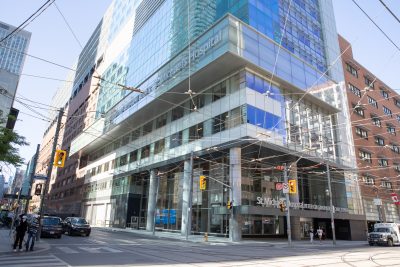
Li Ka Shing International Centre in Health Care Education

Allan Waters' Family Patient Simulation Centre

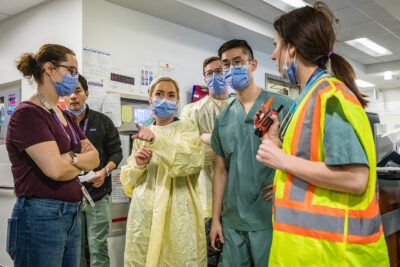
patient simulation centre image

Much like the aviation industry uses flight simulators to train pilots, health-care professionals use patient simulators to learn, first-hand, how to care for patients and respond to critical situations.

Simulation encompasses a broad spectrum of education and research tools. Standardized patients are actors who perform as real patients would in a clinical encounter. Part-task trainers are models made of plastic and latex that simulate the body with anatomical correctness to allow trainees to practice technical procedures. These models often incorporate virtual reality components to improve their fidelity. High fidelity full body simulation uses computer driven mannequins to recreate patient care in floor beds, operating rooms, intensive care units, and emergency rooms. These mannequins have pulses, heart sounds, and breath sounds, but more importantly, they respond to interventions by participants, such as the administration of oxygen, drugs, fluids, and chest compressions.

In 1996 at St. Michael's Hospital, University of Toronto, we were pioneers in simulation as only the second simulation centre in Canada. As a teaching hospital affiliated with the University of Toronto, St. Michael's Hospital actively trains medical and allied health care students at its Patient Simulation Centre. The Centre also serves a large number of health-care practitioners within the hospital and at other surrounding hospitals in southern Ontario.

Using a patient simulator, instructors reproduce various scenarios from basic patient interactions to technical procedures to critical situations, such as intra-operative cases, trauma emergencies and cardiac life support. The Simulation Centre can be transformed into an operating room, emergency trauma suite, intensive care unit or ward setting, and for added effect, scenarios may include role players (i.e. a surgeon, circulating nurse, respiratory therapist, etc.). The training participants are immersed in a simulated environment, and whatever the scenario, every effort is made to ensure that they feel the same sense of stress and urgency as they would during a real-life experience. By the end of the simulation session, they will have gained hands-on training with no risk to patients.

St. Michael's Hospital's Patient Simulation Centre gratefully acknowledges the generous donations of the Louis Odette Family and the Allan Waters Family for their tremendous support through the St. Michael's Hospital Foundation.

Medical Director, Dr. Viren Naik

Contact Us

Roger Chow
Phone: 416-864-6060, Ext. 2019
E-mail: ChowR@smh.toronto.on.ca

Related Links

University of Toronto Fellowship in Simulation Education